What Is Game VFX? How Visual Effects Bring Games to Life
Visual effects play an important role in making video games more immersive, engaging, and visually appealing. From explosive combat effects and magical spells to realistic weather conditions and environmental interactions, these details bring game worlds to life.
But what is VFX in game development, and how does it contribute to the overall gaming experience? In this guide, we will explain what game visual effects are, explore their different types, examine how they are created in Unity and Unreal Engine, and discuss why VFX is an essential part of modern game development.
What Is VFX in Game Development?
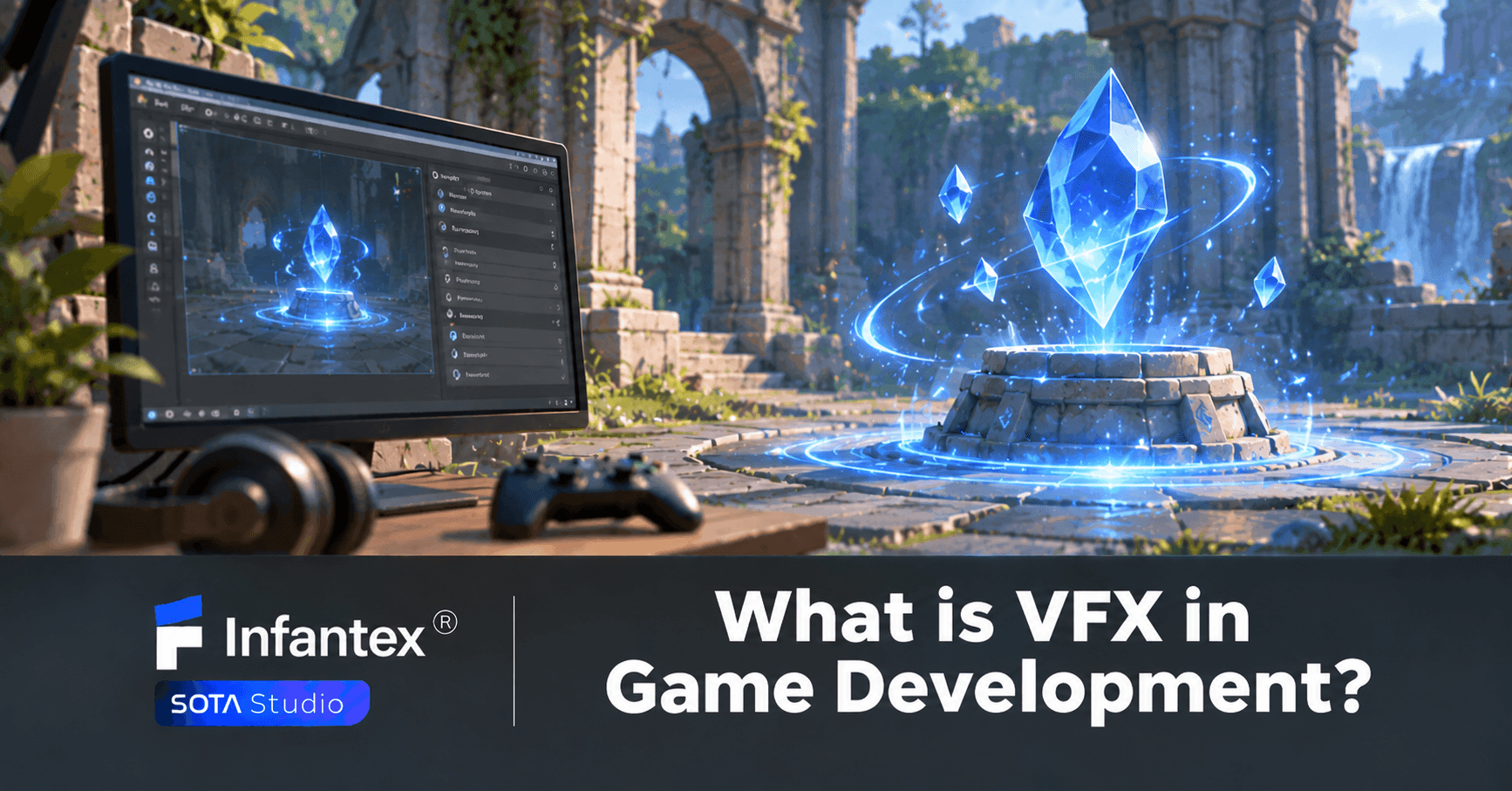
VFX (Visual Effects) in game development refers to visual elements that make gameplay more dynamic and engaging. These effects include explosions, fire, smoke, sparks, magic spells, water splashes, and other visual details that bring a game world to life.
Game VFX works in real time and responds to player actions or in-game events. For example, when a character casts a spell, VFX creates glowing energy, magical particles, and impact effects that make the action feel more realistic and exciting. In simple terms, game VFX makes what happens in a game look and feel more impactful. It enhances gameplay feedback, builds atmosphere, and creates a more immersive experience for players.
Visual effects games rely on more than detailed character models and beautifully designed environments. VFX adds movement, energy, and feedback to these visual elements. Without it, even a well-designed game can feel static or lack emotional impact.
Enhancing Gameplay Feedback
Visual effects help players understand the results of their actions. When a character takes damage, a hit effect or damage indicator provides immediate feedback. Similarly, particle effects, flashes, and impact animations make attacks feel more responsive. These visual cues are particularly important in action games, fighting games, and multiplayer titles, where players need to recognize gameplay events quickly.
Creating Immersive Game Environments
Environmental VFX makes virtual worlds feel more alive. Falling leaves, drifting dust, flowing water, fog, rain, and changing lighting conditions create a stronger sense of atmosphere. For example, a dark fantasy environment may use dense fog, floating particles, and subtle lighting effects to establish a mysterious atmosphere. A futuristic science-fiction game may use holographic projections, energy fields, and glowing interfaces to reinforce its setting.
Strengthening Visual Storytelling
VFX can communicate information without relying entirely on dialogue or text. A magical portal may indicate a transition between locations, while environmental destruction can suggest the impact of a major in-game event. These effects help developers communicate emotions, establish narrative moments, and make important scenes more memorable.
Improving Game Identity
A consistent visual effects style can make a game more recognizable. Distinctive spell effects, signature attack animations, and unique particle designs contribute to its artistic direction.
For game studios, this means VFX is not only a technical element but also an important part of visual branding. Well-designed effects help a game stand out in an increasingly competitive market.
Common Types of Game VFX
Game VFX covers a wide range of visual elements. The specific effects depend on the game's genre, art direction, gameplay mechanics, and target platform.
Particle Effects
Particle effects are among the most widely used techniques in game VFX. They involve generating large numbers of small visual elements to simulate phenomena such as fire, smoke, dust, sparks, rain, and magical energy. For example, a sword collision may generate sparks, while a character running across a dusty surface may leave a trail of particles behind. Particle systems can also create more complex effects, including explosions, energy waves, and environmental interactions.
Explosions and Impact Effects
Combat-focused games often use explosions, shockwaves, hit flashes, and debris to make attacks feel powerful. These effects provide visual feedback during gameplay and help communicate the intensity of an action. Their timing and scale must be carefully designed to match the animation and gameplay mechanics.
Magic and Energy Effects
Fantasy and science-fiction games frequently use magical and energy-based visual effects. These include spell casting, glowing auras, energy beams, teleportation, shields, and supernatural abilities.
Unlike realistic effects, these elements allow artists to experiment with color, shape, movement, and distortion. Their design should remain consistent with the game's visual direction while ensuring that players can easily recognize different abilities.
Environmental Effects
Environmental VFX focuses on bringing game environments to life. Common examples include rain, snow, fog, wind, water splashes, falling leaves, and atmospheric particles. It helps establish the mood of a scene and make the environment feel more interactive. They can also respond dynamically to player movement, weather changes, or in-game events.
Lighting and Shader Effects
Lighting and shader effects influence how objects, characters, and environments appear during gameplay. Bloom, glow, distortion, transparency, refraction, and dynamic lighting can all contribute to a more polished visual experience. These techniques are particularly useful for creating futuristic environments, magical objects, and cinematic gameplay moments.
Key Elements of Effective Game VFX
Creating effective game VFX requires more than impressive visuals. Each effect needs to fit the game's artistic direction, communicate its purpose clearly, and work smoothly within the game environment. Several key elements contribute to the quality of visual effects in game development.
Visual Consistency
Visual effects should match the overall art style of the game. Colors, shapes, lighting, and particle designs need to complement the characters, environments, and other visual assets. Consistency helps create a cohesive look and ensures that effects feel like a natural part of the game world.
Timing and Animation
Timing plays an important role in how visual effects appear and interact with gameplay. Effects should align with character movements, attacks, and in-game events. Smooth transitions and well-timed animations make actions feel more natural and help effects blend seamlessly with gameplay.
Visual Clarity
Effective VFX should communicate information without overwhelming the screen. Effects need to be easy to recognize, especially during fast-paced gameplay. Clear shapes, appropriate colors, and controlled particle density help players distinguish between different actions and events.
Performance Optimization
Visual quality should not come at the expense of game performance. Complex particle systems, shaders, and textures can increase rendering costs and affect frame rates. VFX artists need to optimize these elements based on the target platform to maintain smooth gameplay across different devices.
How Is Game VFX Created?
Creating game VFX requires a combination of artistic skills and technical knowledge. A typical VFX production process involves several stages.
1. Concept and Visual Planning
The process begins with understanding the game's art direction, mechanics, and visual requirements. Artists determine what each effect should communicate and how it should appear within the game world. Reference images, sketches, and visual experiments help establish the effect's shape, color, scale, and movement before production begins.
2. Creating Visual Assets
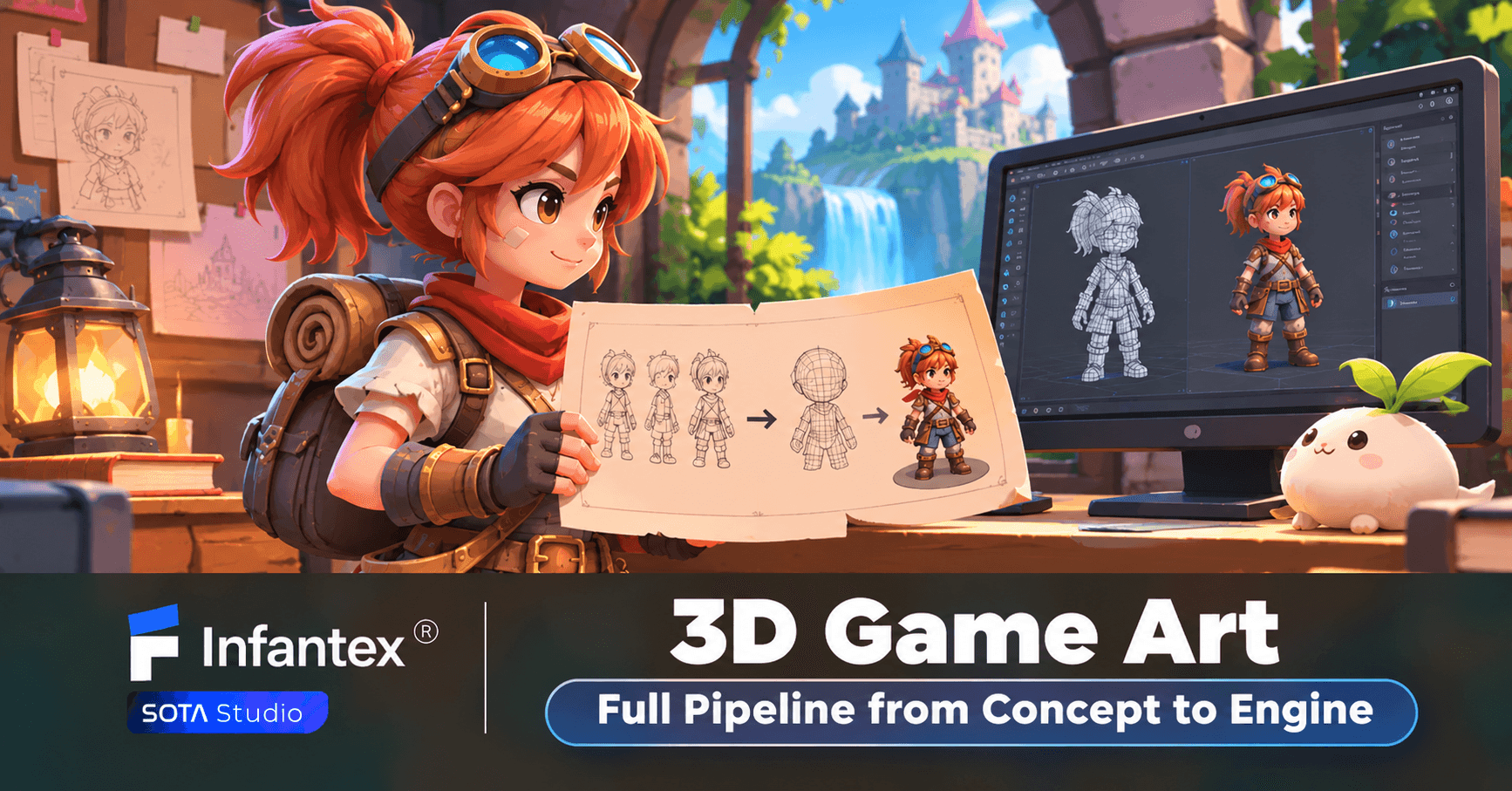
Depending on the effect, artists may create textures, meshes, flipbooks, masks, and other visual assets using tools such as Adobe Photoshop, Blender, or other 2D and 3D software. For instance, a fire effect may require hand-painted textures, animated noise patterns, and particle elements. A magical explosion may combine several layers of textures, glowing shapes, and distortion effects.
3. Building Effects in a Game Engine
After preparing the assets, artists implement them in a game engine. This stage involves configuring particle systems, materials, shaders, animation parameters, and effect behavior. Unity and Unreal Engine provide dedicated tools that allow artists to create and control real-time visual effects without building every element from scratch.
4. Integration and Testing
VFX artists work with game developers and animators to integrate effects into gameplay. They need to ensure that each effect triggers at the correct moment and interacts properly with characters, objects, and the environment. Testing also helps identify visual issues, unexpected behavior, and performance bottlenecks.
5. Optimization and Final Polish
The final stage focuses on improving performance and visual consistency. Artists may adjust particle counts, texture resolution, shader complexity, and rendering settings to meet platform requirements.
This is especially important for mobile games and large-scale multiplayer titles, where excessive visual effects can affect frame rates and gameplay responsiveness.
Unity VFX vs. Unreal VFX: What Are the Differences?
Unity and Unreal Engine are two popular game engines used to create real-time visual effects. Both offer powerful VFX tools, but their workflows and capabilities differ. Choosing between Unity VFX and Unreal VFX depends on the project's technical requirements, target platforms, artistic direction, and development pipeline.
Unity VFX
Unity offers several tools for creating real-time visual effects, such as the Particle System and Visual Effect Graph. The Particle System is suitable for common effects such as fire, smoke, sparks, and environmental particles. It allows artists to control particle movement, emission, color, size, and lifetime through configurable modules.
Visual Effect Graph offers a node-based workflow for creating more complex GPU-based particle simulations. It is particularly useful for large-scale effects that require a high number of particles and more advanced visual control. Unity VFX is widely used in mobile games, indie projects, and cross-platform development. Its flexible workflow makes it suitable for projects that need to balance visual quality with performance across different devices.
Unreal VFX
Unreal Engine features Niagara, its main visual effects system for creating real-time particle simulations and complex visual effects. Niagara uses a modular, node-based workflow that gives artists detailed control over particle behavior, simulation logic, and system interactions. It supports advanced effects such as large-scale explosions, environmental simulations, energy effects, and complex gameplay visuals.
Unreal Engine also offers advanced rendering features that can complement VFX production. These capabilities make it a strong option for projects that prioritize high visual fidelity and sophisticated real-time effects.
Scale Your Game Production with Infantex
Infantex provides game development and game art outsourcing services for studios looking to create high-quality games and scale their production capabilities. With experience across different genres, platforms, and production stages, we help turn creative concepts into engaging gaming experiences.
With 7+ years of experience and 50+ projects delivered for global clients, our team understands the challenges of managing game production, maintaining visual quality, and meeting project deadlines. We support a wide range of visual production needs, including 2D/3D game art, animation, and player-focused UI/UX design. Our artists help studios maintain artistic consistency, manage increasing workloads, and keep production on schedule.
For studios that need long-term support or additional technical resources, we also offer a dedicated game team model. Whether you need skilled game artists for specific production stages or a dedicated team for full-cycle game development, our flexible outsourcing solutions are tailored to your project's scope and requirements.
Looking to strengthen your game production team? Contact Infantex to discuss your project and find the right outsourcing solution to bring your game vision to life.
Conclusion
VFX is an essential part of modern game development. It brings gameplay interactions to life, enhances environmental storytelling, improves visual feedback, and helps establish a distinctive artistic identity. With a well-planned VFX pipeline and the right development resources, game studios can create visually engaging experiences without compromising performance.
For studios looking to strengthen their visual production capabilities, partnering with an experienced game art outsourcing company like Infantex can help expand production capacity and support the delivery of high-quality games.
Frequently Asked Questions (FAQs)
1. What does VFX stand for in game development?
VFX stands for Visual Effects. In game development, it refers to digitally created visual elements such as explosions, fire, smoke, particles, magic spells, and environmental effects that enhance gameplay and visual presentation.
2. What is the difference between VFX and animation in games?
Animation focuses on creating movement for characters, objects, and other game elements. VFX focuses on visual phenomena such as particles, explosions, lighting effects, and magical abilities. Both work together to create convincing and engaging gameplay experiences.
3. What software is used to create game VFX?
Game VFX artists commonly use Unity, Unreal Engine, Blender, and Adobe Photoshop. Unity provides the Particle System and Visual Effect Graph, while Unreal Engine uses Niagara for real-time visual effects production.
4. Is VFX important for mobile game development?
Yes. VFX improves gameplay feedback, visual engagement, and the overall presentation of mobile games. However, mobile VFX must be carefully optimized to maintain stable performance across devices with different hardware capabilities.
5. Can game studios outsource VFX production?
Yes. Game studios can outsource VFX and other game art production tasks to specialized external teams. This allows them to access additional artistic resources, manage production workloads, and maintain development schedules without expanding their in-house teams.
6. What should studios look for in a game VFX outsourcing company?
Studios should consider the provider's portfolio, experience with game engines, technical knowledge, optimization capabilities, and ability to follow an established art direction. Clear communication and flexible team structures are also important for successful collaboration.