Game Art Outsourcing Costs: What Determines Your Budget?
Game art plays a critical role in shaping a game's visual identity, player experience, and market appeal. However, producing high-quality assets requires skilled artists, specialized software, and considerable production time. For game studios working with limited resources or tight deadlines, understanding game art outsourcing costs is essential to planning a realistic development budget.
The cost of outsourcing game art depends on several factors, including art style, asset complexity, project scope, production requirements, and the outsourcing team's expertise. Whether you need 2D character designs, detailed 3D environments, or ongoing art production support, understanding these cost drivers can help you choose the right outsourcing model and maximize your investment.
This guide explores the key factors that determine game art outsourcing pricing, explains how different types of game art affect your budget, and shares practical ways to manage production costs without compromising visual quality.
What Is Game Art Outsourcing?
Game art outsourcing is the practice of partnering with an external team or specialized game art outsourcing company to produce visual assets for a video game. Instead of handling every aspect of art production internally, game studios can delegate specific tasks or entire art pipelines to experienced external artists.
These services cover a wide range of production needs, including concept art, 2D character design, 3D character modeling, environment art, texturing, animation, and promotional visuals. Depending on the project, an outsourcing partner may handle individual assets, support an existing art department, or manage a complete production pipeline.
There is no universal price for game art outsourcing because every project has different creative and technical requirements. A simple 2D prop, a stylized mobile game character, and a highly detailed realistic 3D environment require different levels of expertise, production time, and technical resources.
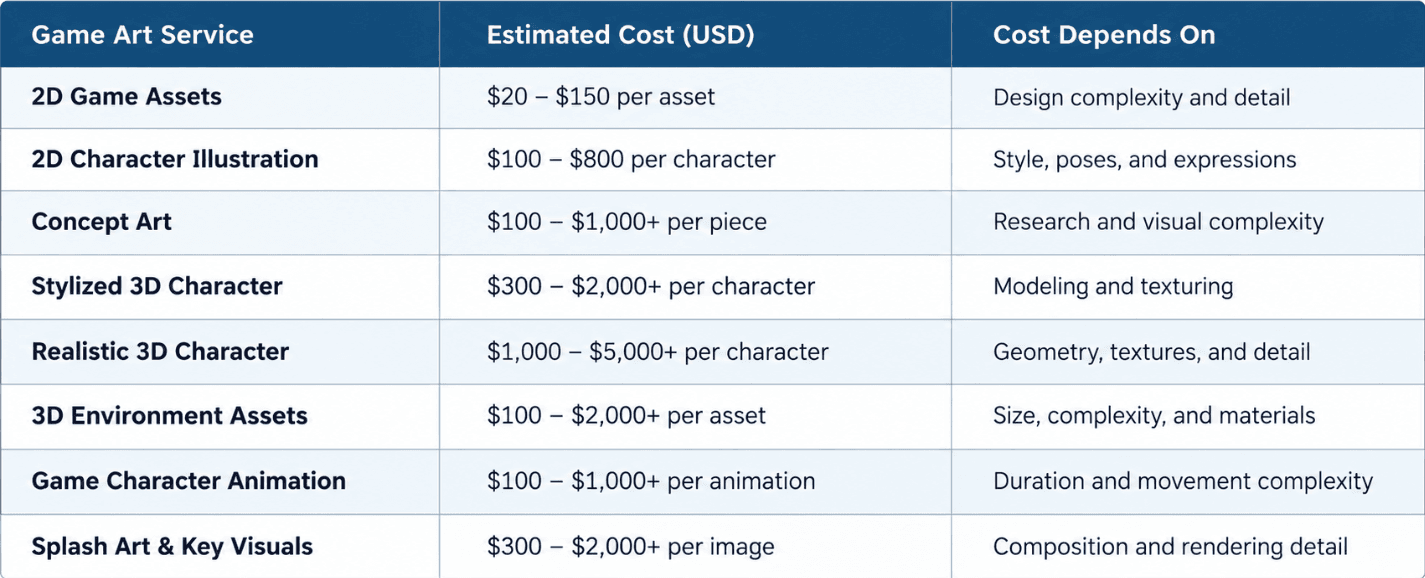
As a general budgeting reference, studios may encounter the following indicative price ranges when working with external artists. These estimates are illustrative rather than fixed market rates. Actual quotes vary by region, provider, asset specifications, and revision requirements.
These ranges provide an initial reference for comparing different production requirements, not a guaranteed quotation. For example, a 3D character with a simple stylized design and minimal rigging will generally cost less than a realistic character with complex anatomy, detailed textures, facial expressions, and multiple animation requirements.
The final game art production cost also depends on whether the quoted price includes revisions, source files, rigging, optimization, and integration support. Studios should evaluate the complete scope of delivery rather than comparing prices alone. For projects requiring dozens or hundreds of assets, an outsourcing partner may offer package pricing or volume-based rates. Long-term projects may also benefit from dedicated art teams, especially when the studio needs consistent production capacity across multiple development milestones.
7 Key Factors That Determine Game Art Outsourcing Costs
Game art outsourcing costs depend on more than the number of assets you need. Art style, technical requirements, team expertise, and production timelines all influence the final budget. Understanding these factors helps studios estimate costs accurately and make informed outsourcing decisions.
1. Art Style and Visual Complexity
Art style directly affects the time and skills required to produce game assets. Simple stylized graphics may require less work than highly detailed, realistic visuals. Realistic 3D games often involve advanced modeling, high-resolution textures, and complex materials, increasing overall production costs. Defining your visual direction early helps the outsourcing team estimate the workload and avoid unnecessary revisions.
2. Type and Complexity of Assets
Different game art assets require different production workflows. A basic 2D prop is generally less expensive than a detailed 3D character that requires modeling, texturing, rigging, and animation. Environment art can also involve additional work, particularly when creating large scenes with multiple materials and reusable assets. Clearly identifying the required deliverables helps studios establish a more realistic budget.
3. Asset Quantity and Project Scope
The number of assets significantly influences total game art production costs. Projects requiring hundreds of characters, props, and environments naturally demand more resources than smaller games. However, reusable models, shared materials, and modular environments can reduce repetitive work. Preparing a detailed asset list before production helps your outsourcing partner estimate costs and allocate resources efficiently.
4. Artist Expertise and Outsourcing Location
Artist experience and outsourcing location both affect pricing. Specialized artists with expertise in realistic character modeling or complex animation may charge higher rates, but their experience can also reduce production time and costly rework. Offshore game art outsourcing can offer competitive pricing while providing access to specialized talent. When comparing providers, consider portfolio quality, communication, and delivery reliability alongside hourly rates.
5. Technical Requirements and Target Platform
Game art production must meet the technical requirements of the target platform and game engine. Mobile games often require optimized models and textures, while high-end PC and console games may demand more detailed assets and advanced materials. Requirements for Unity, Unreal Engine, or VR experiences can also influence production workflows. Providing technical specifications upfront helps prevent unexpected costs during integration.
6. Revision Rounds and Art Direction
Frequent design changes can increase game art outsourcing costs, especially when revisions affect assets that have already entered later production stages. To minimize rework, establish an art style guide, provide clear references, and approve concept art before moving into detailed production. Agreeing on revision limits and additional charges also helps maintain budget control.
7. Project Timeline and Delivery Schedule
Tight deadlines may require additional artists or adjustments to production schedules, potentially increasing outsourcing costs. Larger teams can help accelerate delivery, but only when tasks and art direction are managed effectively. Planning milestones, prioritizing essential assets, and allowing sufficient review time help studios avoid rush fees and maintain consistent quality. Ultimately, controlling game art outsourcing costs starts with clear requirements, realistic timelines, and a production plan aligned with your project's goals.
Game Art Outsourcing Pricing Models: Which One Fits Your Project?
Beyond asset complexity and production scope, the pricing model you choose affects how you manage your budget. Most game art outsourcing arrangements follow one of three common approaches: per-asset pricing, hourly or daily billing and dedicated team engagement.
Per-Asset Pricing
Per-asset pricing establishes a fixed cost for a clearly defined deliverable. For example, a studio may agree on a price for each character illustration, 3D prop, or environment asset. This model works well when the scope is stable and deliverables can be specified in advance. It makes budgeting easier because the studio can estimate total expenditure based on the number and type of assets required. However, per-asset pricing becomes less predictable when requirements change frequently or assets vary considerably in complexity. Studios should ensure that specifications, revision limits, and technical requirements are clearly documented before approving the quote.
Hourly or Daily Pricing
Time-based pricing charges for the actual hours or days spent on production. It can be suitable for projects with evolving requirements, ongoing creative exploration, or tasks that are difficult to estimate precisely at the beginning. This approach provides flexibility when the art direction is still developing. However, it requires effective project management and regular progress reviews to keep spending under control. Studios should agree on reporting procedures, expected effort, and approval requirements for work that exceeds the initial estimate.
Dedicated Game Art Team
A dedicated game art team is an external group of artists assigned to support a studio over an agreed period. Depending on the arrangement, the team may include 2D artists, 3D modelers, animators, technical artists, and art leads. This model is particularly useful for studios with continuous production needs, ongoing content updates, or multiple projects requiring consistent artistic support. Although a dedicated team involves a recurring budget commitment, it can provide greater control over production priorities and resource allocation. It also helps maintain visual consistency because the same artists become familiar with the game's art direction, technical pipeline, and quality standards. For studios planning long-term production, a dedicated team can be a practical alternative to repeatedly sourcing individual freelancers or expanding the internal art department.
How to Reduce Game Art Outsourcing Costs Without Sacrificing Quality
Reducing game art production costs does not necessarily mean choosing cheaper artists or lowering visual standards. In many cases, the greatest savings come from improving planning, reducing rework, and making better use of production resources.
Start by defining the art direction and technical requirements before production begins. Clear visual references, style guides, and asset specifications help the outsourcing team understand expectations and minimize misalignment.Next, prioritize reusable assets. Modular environments, shared materials, base character models, and consistent animation systems can reduce repetitive work across a project. These approaches are especially valuable for games that require large quantities of similar assets.Studios should also consider outsourcing specific production bottlenecks rather than automatically transferring the entire art pipeline. If the internal team has strong concept artists but limited 3D modeling capacity, outsourcing 3D character production may deliver more immediate value than outsourcing every art function.
Another effective strategy is to use milestone-based approvals. Reviewing concept art, blockouts, and representative assets before scaling production helps identify problems early, when they are generally less expensive to correct. Finally, evaluate the total cost of delivery instead of comparing hourly rates alone. An experienced game art outsourcing partner may deliver better value through efficient workflows, fewer revisions, reliable communication, and consistent technical quality. The objective is to achieve the required visual quality at a predictable cost while keeping the broader game development schedule on track.
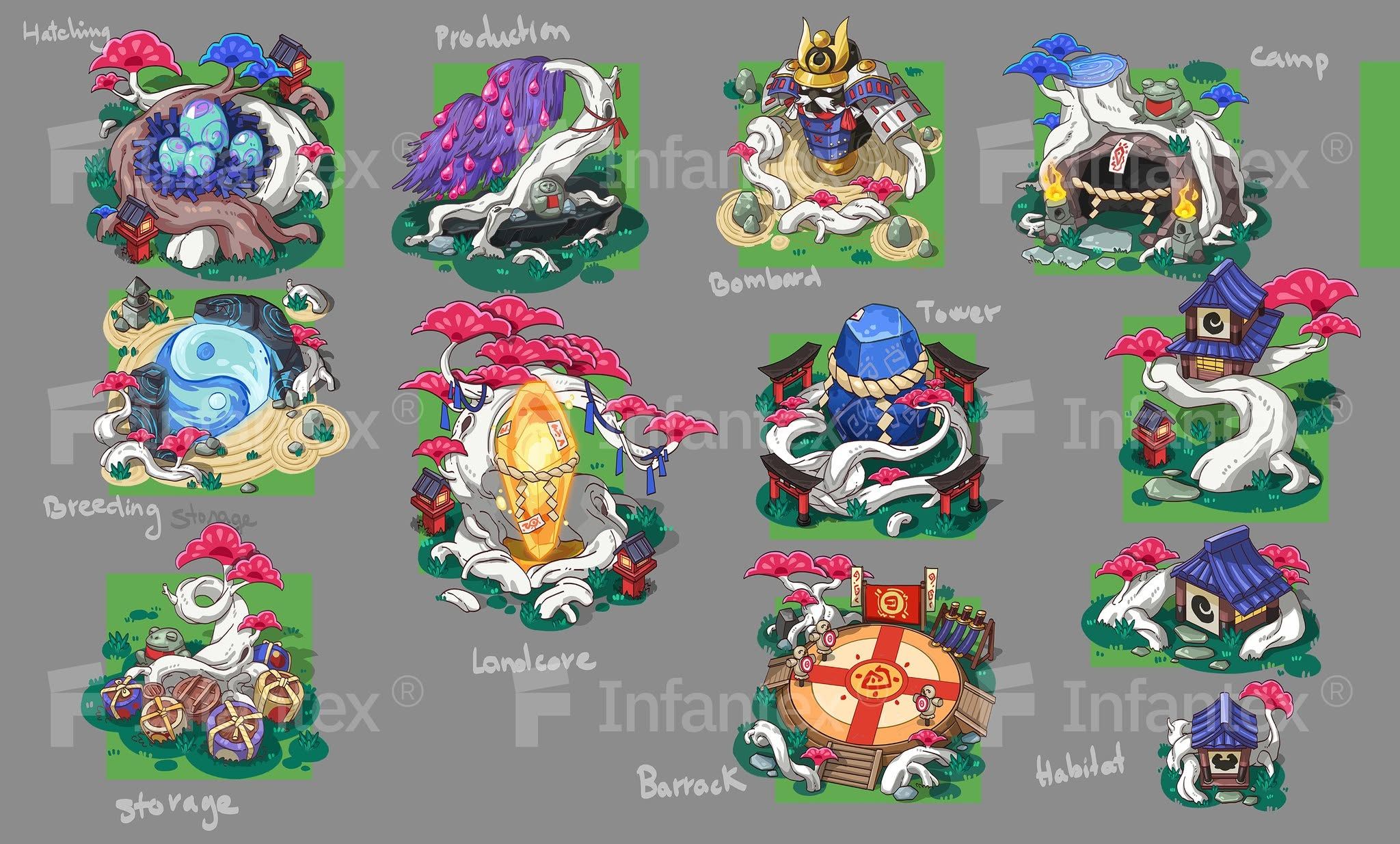
Infantex provides game art outsourcing services designed to support studios throughout different stages of game development. Whether you need assistance with early visual development or production-ready assets, the team can support your project with services tailored to its artistic and technical requirements. Our capabilities include concept art, 3D character art, 3D environment art, splash art and key visuals, animation, and LiveOps content. This range of services allows studios to access specialized art production support based on their project scope, existing team capabilities, and development priorities. See more our projects here
For projects with tight deadlines or growing content requirements, outsourcing can help address production bottlenecks while allowing internal developers to focus on core gameplay systems and other critical tasks. By aligning the production scope, art direction, and delivery expectations from the beginning, studios can build a more predictable workflow and manage game art outsourcing costs more effectively. Whether you are developing a new game, expanding an existing title, or preparing regular LiveOps updates, Infantex can help you scale art production to match your needs.
Visit Infantex Game Art & UI/UX to explore our services and discuss your project requirements with our team.
Conclusion
Game art outsourcing costs are the result of a series of choices rather than a fixed price tag. Art style, asset type and quantity, quality expectations, team seniority, location, pricing model, and the way you manage feedback all combine to shape what you will pay. When you understand these factors, you can write sharper briefs, compare vendors more fairly, and avoid the hidden costs that quietly erode a budget.
If you are still weighing your options, a good next step is to map your asset list and style goals, then talk through them with a partner who can give honest guidance. If that sounds useful, we would be glad to set up a relaxed discovery call with the Infantex team to explore what your game art needs and what a realistic budget could look like.