

POST
May 15, 2026
White Label Crypto Wallet: Everything Businesses Need to Know in 2026
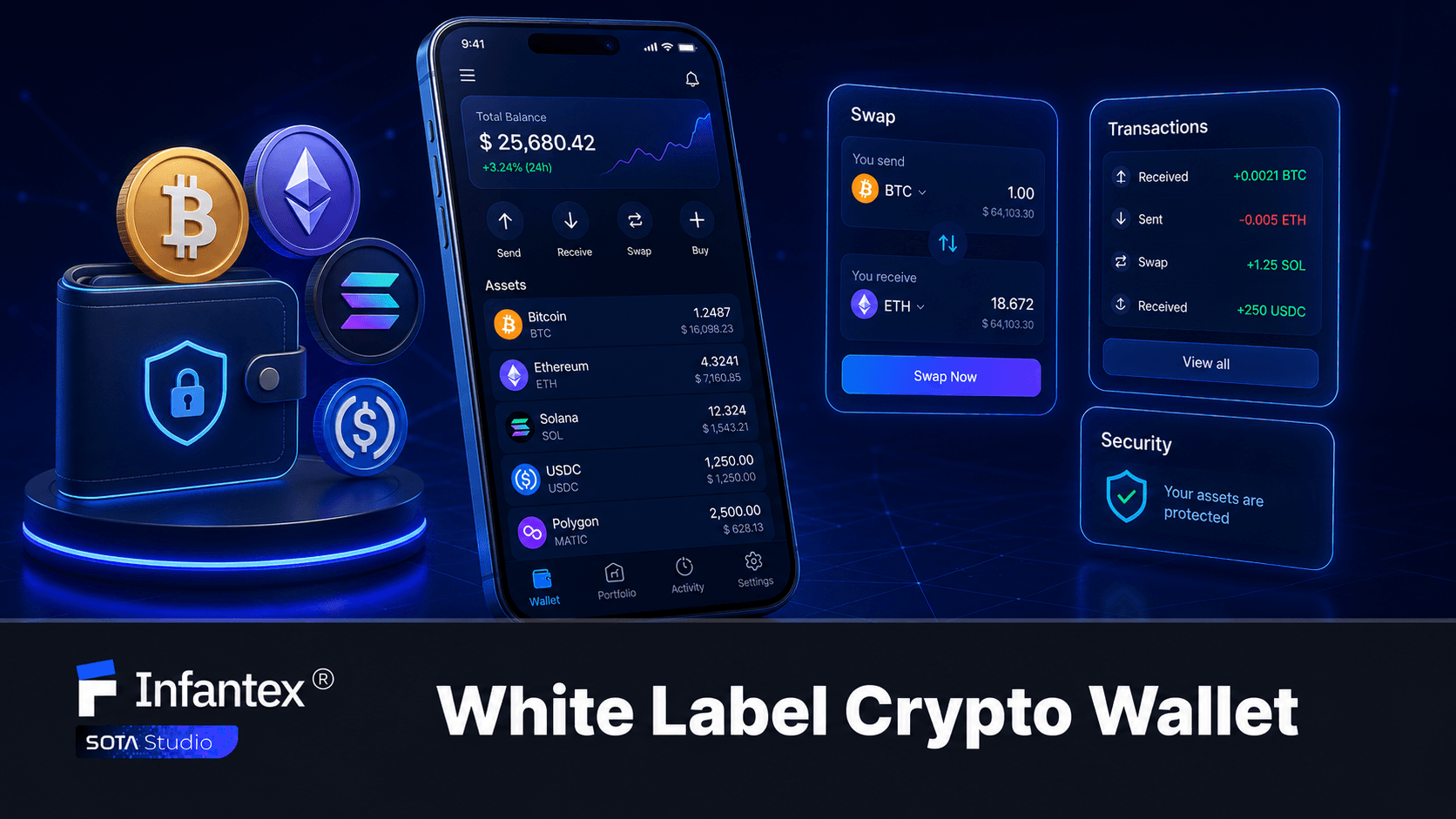
As Web3 adoption continues to expand across industries, digital wallets are becoming one of the most important gateways between users and blockchain ecosystems. From crypto exchanges and DeFi platforms to GameFi projects and fintech applications, businesses are increasingly looking for secure and scalable white label wallet solutions that can support digital asset transactions while delivering a seamless user experience.
In this article, we will explore everything businesses need to know about white label crypto wallets in 2026, including their benefits, essential features, development process, industry applications and why many Web3 companies are partnering with experienced blockchain development firms like Infantex to accelerate wallet deployment.
What Is a White Label Crypto Wallet?
A white label crypto wallet is a ready-made blockchain wallet infrastructure that businesses can customize and launch under their own brand identity. Instead of building an entirely new wallet system from scratch, companies use an existing framework that already includes core functionalities such as asset storage, transaction management, token support, and security mechanisms.

The term “white label” refers to a product developed by one company that can be rebranded and used by another company as its own solution. In the blockchain industry, this model allows businesses to significantly reduce development complexity while still delivering a professional Web3 wallet experience to end users.
Why White Label Crypto Wallet Is Growing Rapidly
The rapid expansion of Web3 ecosystems has created a strong demand for accessible blockchain infrastructure. As more businesses move into digital assets, they need wallet systems that can support secure transactions, token management, and user onboarding at scale.
Data published by CoinLaw shows that there were more than 820 million active cryptocurrency wallets worldwide in 2025, accounting for roughly 15% of the global internet population. The report also highlights growing enterprise participation, with institutional wallet ownership increasing by 51% year-over-year.
Faster Web3 Product Launches
Building a wallet from scratch often requires extensive engineering resources, blockchain expertise, security testing, and ongoing maintenance. For many startups and growing businesses, this creates operational bottlenecks that slow down go-to-market strategies. White label crypto wallet solutions help companies accelerate deployment by removing much of the backend complexity associated with blockchain infrastructure development.
Instead of spending months building wallet architecture internally, businesses can launch using pre-built frameworks that already support key functionalities such as multi-chain integration, transaction signing, token storage, and security systems.
Better User Experience for Mainstream Adoption
Early-generation crypto wallets were often difficult for mainstream users to understand. Complicated onboarding processes, confusing interfaces, and difficult wallet interactions created major barriers for adoption.
Today, businesses recognize that usability is one of the biggest differentiators in Web3 products. Modern white label crypto wallets prioritize intuitive interfaces, simplified onboarding, responsive mobile design, embedded wallet functionality, and seamless asset management experiences that appeal to both crypto-native users and newcomers.
Advancements in Wallet Technology
Technologies such as account abstraction, embedded wallets, MPC security models, and chain abstraction are making crypto wallets more scalable and user-friendly than ever before. Businesses can now integrate enterprise-level security and advanced blockchain capabilities without building every infrastructure component internally. As blockchain adoption continues expanding, white label crypto wallets are becoming one of the most practical and scalable approaches for businesses entering the Web3 economy.
Also read: White-Label NFT Marketplace: The Complete Business Guide
Key Benefits of White Label Crypto Wallet Solutions
White label crypto wallet solutions offer several strategic advantages for businesses entering the blockchain market.
Faster Time-to-Market
One of the biggest advantages of white label crypto wallets is speed. Developing a crypto wallet from scratch can take many months due to blockchain integration complexity, smart contract testing, security implementation, and infrastructure optimization.
White label solutions dramatically reduce this timeline by providing ready-made architecture that businesses can customize and deploy quickly. For startups operating in fast-moving Web3 markets, reducing launch delays can create significant competitive advantages.
Lower Development Costs
Custom blockchain infrastructure requires experienced engineers, security specialists, DevOps teams, and long-term maintenance resources. These costs can become substantial, particularly for startups and growing businesses. White label crypto wallet solutions reduce operational overhead because companies reuse existing infrastructure rather than building every component independently. This enables businesses to allocate more resources toward marketing, ecosystem expansion, and product innovation.

Enhanced Security Infrastructure
Security is one of the most critical aspects of any crypto wallet.Since wallets manage digital assets and sensitive transaction data, vulnerabilities can create serious financial and reputational risks. Modern white label wallets integrate advanced security features such as encrypted key management, biometric authentication, two-factor authentication, transaction signing protections, and suspicious activity monitoring. Because these systems are already tested and optimized, businesses reduce the risk of common infrastructure-level security failures.
Scalability for Future Growth
Many Web3 businesses begin with relatively small user bases but scale rapidly as ecosystems grow. White label wallet infrastructure is often designed with scalability in mind, allowing businesses to support increasing transaction volumes, additional blockchain integrations, and expanding feature sets without rebuilding their systems entirely.
Flexible Branding and Customization
Although white label crypto wallets rely on pre-built infrastructure, businesses still maintain significant customization flexibility. Companies can modify visual identity, interface layouts, supported tokens, user flows, and ecosystem integrations to create wallet experiences aligned with their brand positioning. This allows businesses to deliver unique products while still benefiting from efficient infrastructure deployment.
Essential Features of a Modern White Label Wallet
Modern blockchain wallets are evolving far beyond basic token storage. Businesses now require comprehensive digital asset management systems capable of supporting multiple blockchain ecosystems and advanced Web3 interactions.
Multi-Chain Support
Users increasingly manage assets across Ethereum, Solana, Polygon, BNB Chain, Avalanche, and many other networks. Modern wallets must support seamless multi-chain interactions to provide better flexibility and user convenience. Without multi-chain compatibility, businesses risk limiting user adoption and ecosystem growth.
NFT Integration
NFT functionality has become increasingly important, particularly within gaming ecosystems, creator economies, and digital membership platforms. Modern wallets often include NFT galleries, metadata visualization, ownership verification, and marketplace integrations to support broader digital asset interactions.

Fiat On-Ramp and Off-Ramp Integration
Many mainstream users still rely on traditional payment methods when entering Web3 ecosystems. Integrating fiat payment gateways allows users to purchase crypto assets directly through debit cards, bank transfers, or payment providers without relying on external exchanges.
Advanced Security Features
Security remains a foundational requirement for wallet infrastructure. Modern white label wallets commonly include biometric login systems, encrypted private key storage, multi-signature functionality, session management protections, and fraud monitoring systems. Enterprise-level solutions may also integrate MPC wallet technology to further strengthen asset protection.

Cross-Platform Accessibility
Users expect consistent wallet experiences across mobile applications, browser extensions, and desktop environments. Responsive design and synchronized cross-device accessibility are becoming essential standards for modern wallet development.
Industries Using White Label Wallet Solutions
White label wallet adoption is rapidly expanding across multiple industries because digital asset infrastructure is becoming increasingly integrated into modern digital ecosystems.
Web3 Gaming
In Web3 gaming ecosystems, wallets act as the foundation for player-owned economies. Players use wallets to store NFTs, manage in-game assets, conduct marketplace transactions, and participate in token-based reward systems. White label wallets help gaming companies deliver integrated blockchain experiences without relying heavily on third-party wallet providers.
DeFi Platforms
DeFi applications require secure wallet infrastructure for staking, lending, liquidity pools, yield farming, and decentralized trading. By integrating white label wallets directly into their platforms, DeFi businesses can streamline onboarding and improve overall user retention.
Crypto Exchanges
Crypto exchanges rely heavily on wallet systems for digital asset custody and transaction management. Scalable wallet infrastructure becomes essential for supporting large transaction volumes while maintaining operational efficiency and security standards.

Fintech Applications
Many fintech companies are exploring blockchain-based payments, remittance systems, loyalty programs, and tokenized assets. White label wallet solutions allow these businesses to integrate Web3 functionality without rebuilding their entire infrastructure stack from the ground up.
NFT Marketplaces
NFT marketplaces and creator platforms use wallets to verify ownership, facilitate digital transactions, and support community engagement systems. As digital identity becomes increasingly connected to blockchain ecosystems, wallet infrastructure is becoming central to creator economy growth.
How the White Label Crypto Wallet Development Process Works
Although white label wallets provide ready-made infrastructure, successful deployment still requires a structured development process.
Requirement Analysis and Planning
The first stage involves identifying business objectives, target audiences, blockchain requirements, compliance expectations, and ecosystem functionality. This planning phase helps define the wallet architecture and customization scope.
UI/UX Design and Branding
User experience strongly influences retention and adoption in Web3 products. Businesses often customize wallet interfaces to align with brand identity while improving onboarding simplicity and usability. A well-designed wallet can significantly improve user trust and engagement.
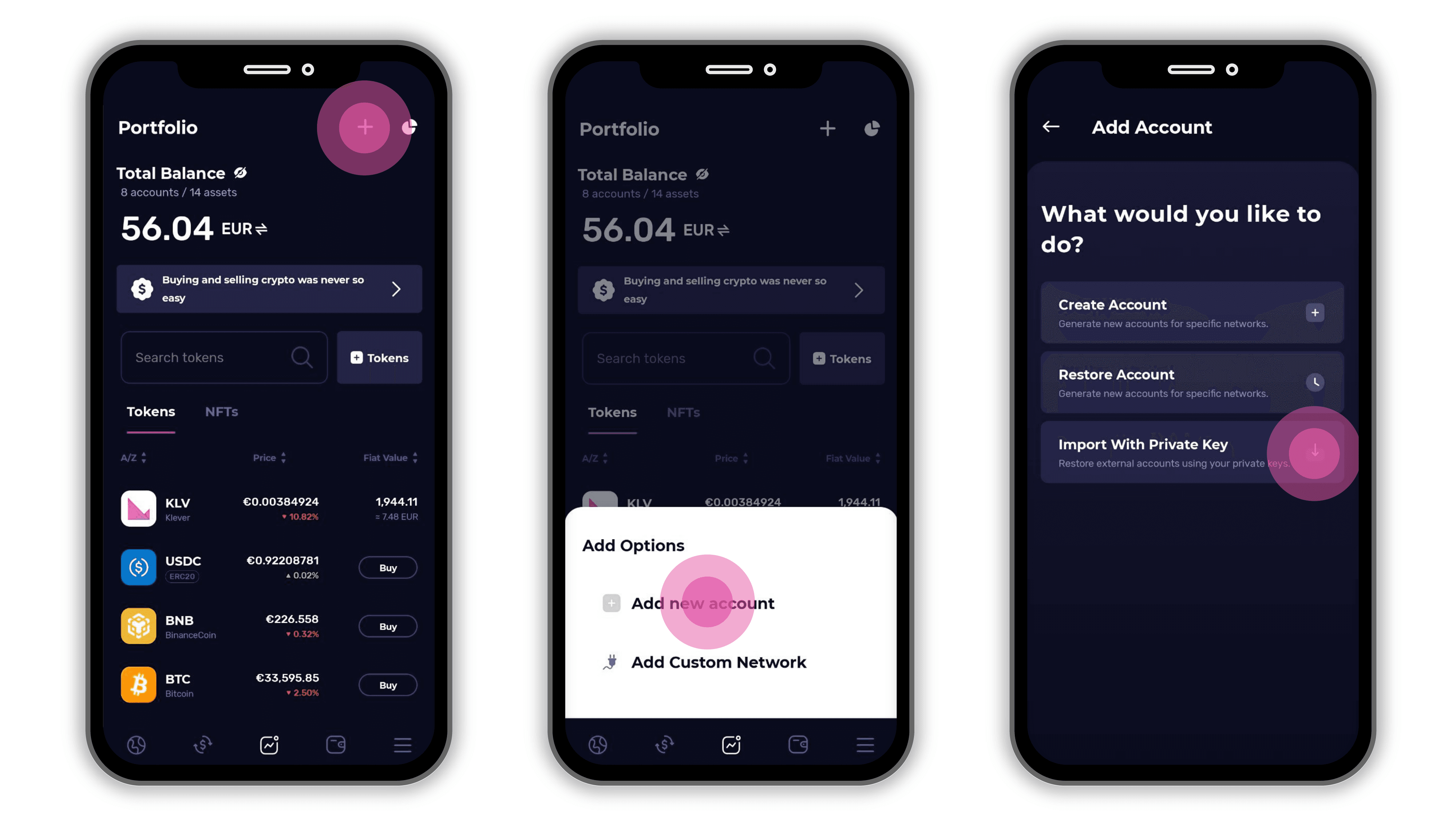
Blockchain and API Integration
During this phase, developers integrate supported blockchain networks, token standards, NFT systems, and third-party APIs. Depending on project requirements, businesses may also integrate DeFi modules, staking functionality, or payment gateways.
Security Testing and Optimization
Before launch, wallets undergo extensive testing to identify vulnerabilities and optimize transaction reliability. Security audits, penetration testing, and encryption validation are critical components of this process.
Deployment and Maintenance
After deployment, wallets require continuous monitoring, infrastructure updates, and compatibility improvements as blockchain ecosystems evolve. Ongoing maintenance helps ensure long-term scalability and platform reliability.
Future Trends in White Label Crypto Wallet Development
Crypto wallets are becoming far more than simple tools for storing digital assets. They are gradually transforming into complete digital identity hubs that connect users to decentralized applications, financial services, gaming ecosystems, and tokenized communities. This evolution is reshaping the future of white label crypto wallet development.
Account Abstraction
One of the biggest barriers to mainstream Web3 adoption has always been wallet complexity. Traditional crypto wallets often require users to manage seed phrases, manually approve transactions, and understand blockchain-specific mechanics that may feel intimidating for non-technical audiences. Account abstraction is changing this. Instead of relying entirely on private keys and seed phrases, users may authenticate through alternative methods such as email logins, biometrics, or social accounts.
Embedded Wallets
Traditional wallet systems often require users to install third-party applications before interacting with Web3 products. This extra step can negatively affect conversion rates and user retention. Embedded wallets solve this problem by integrating wallet functionality directly into applications, games, marketplaces, or platforms. This creates significantly smoother onboarding experiences and helps businesses reduce entry barriers for mainstream users.
Chain Abstraction
Chain abstraction aims to simplify cross-chain interactions by removing much of the complexity associated with switching blockchain networks manually. This could create significantly smoother user experiences in multi-chain ecosystems.
AI-Powered Security Systems
As blockchain adoption grows, security threats are also becoming more sophisticated. Wallet phishing attacks, malicious smart contracts, and fraudulent transactions continue affecting both businesses and users across Web3 ecosystems. AI-based fraud detection and transaction analysis tools may become increasingly integrated into wallet infrastructure. These systems can help identify suspicious behavior patterns and strengthen transaction security.
Why Businesses Choose Infantex for White Label Crypto Wallet Solutions
As blockchain adoption continues accelerating, businesses need development partners that understand both technical infrastructure and evolving Web3 market demands. Infantex provides Blockchain and Web3 development services focused on helping businesses build scalable digital ecosystems.
Blockchain Development Expertise:
Infantex has experience across blockchain development, Web3 game development, NFT ecosystems, smart contracts, and digital asset infrastructure. This strong Web3 background helps businesses build wallet solutions that integrate smoothly with broader blockchain ecosystems and platforms.
Focus on Scalable Infrastructure:
Infantex develops white label crypto wallets with scalability and long-term growth in mind. Instead of treating wallets as standalone products, the team focuses on building solutions that can easily connect with marketplaces, token economies, gaming platforms, and decentralized applications.
Security-First Development Approach:
Security is a key priority throughout the entire development process. Wallet solutions are built following modern blockchain security standards while remaining flexible enough to support future upgrades and new feature integrations.
End-to-End Development Support:
From planning and UI customization to deployment and ongoing maintenance, Infantex provides full support throughout the wallet development lifecycle. This helps businesses reduce development complexity, speed up launch timelines, and focus on growing their Web3 ecosystem.
Conclusion
White label crypto wallets are rapidly becoming one of the most practical solutions for businesses entering the Web3 market.
Instead of spending extensive time and resources building blockchain infrastructure from scratch, businesses can use ready-made wallet frameworks to launch faster, reduce development complexity, and scale more efficiently.
Partnering with experienced blockchain development companies such as Infantex helps businesses drive Web3 growth with expert support and long-term development strategies. Contact our team today to get started.

MOST POPULAR









01/10
Leave a request
Send us a request today!
Share your project brief, scope and timeline. Our team will reply within 24 hours.

Services
Game DevelopmentWeb3 Game DevelopmentCustom Game and GamificationGame Art Outsourcing & UI/UX Design ServicesDedicated Game Development TeamBlockchain Development and Whitelabel ServicesContact us
- Address
- 16F, MD Complex Tower, 68 Nguyen Co Thach Street, Tu Liem District, Ha Noi Capital, Vietnam
- sale@infantex.io
© Copyright 2026 Infantex . All rights reserved.